Why Is One Room in Your House Always Too Hot or Too Cold?
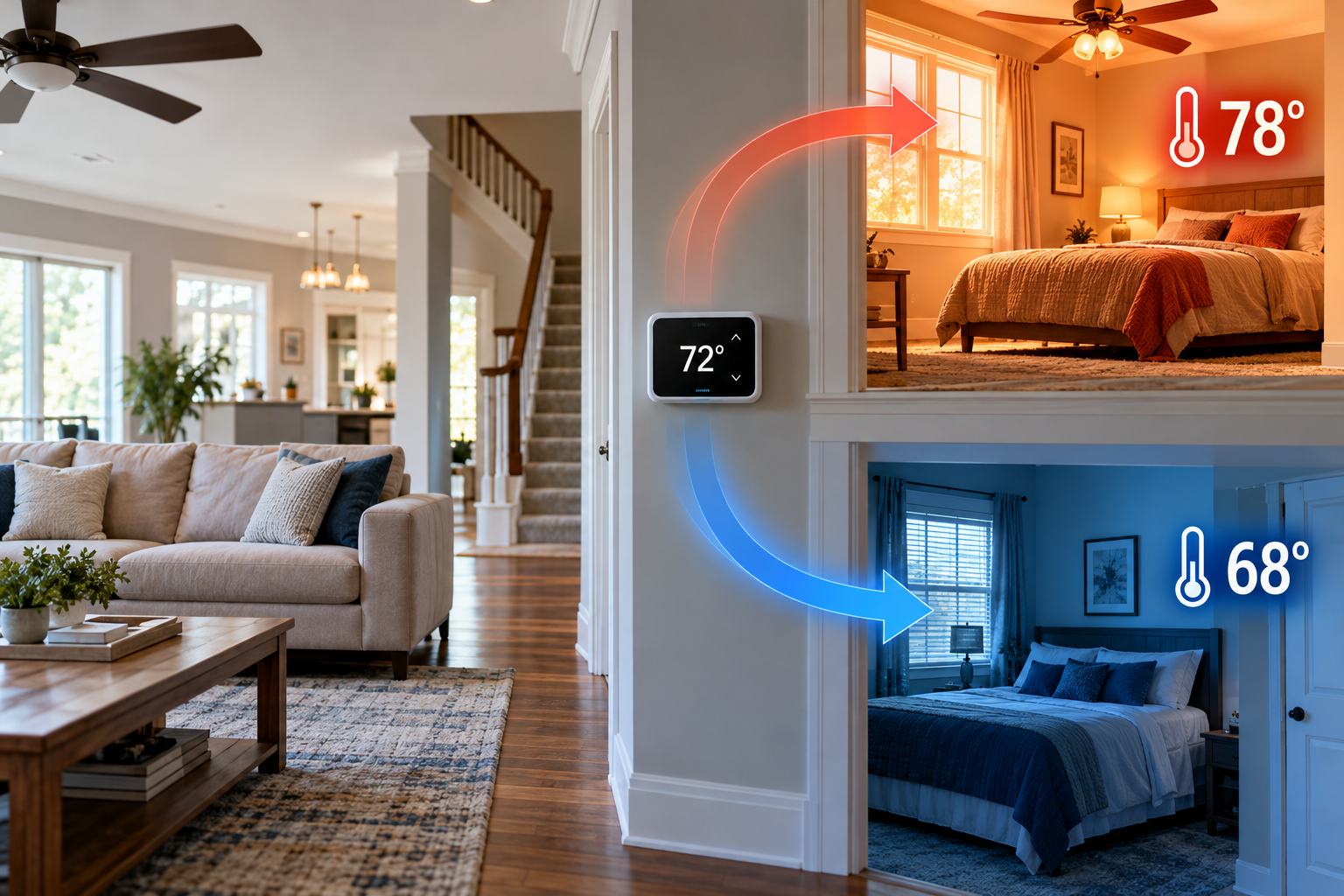
You walk into the living room, and everything feels comfortable. The thermostat reads 72 degrees. But when you head upstairs to the bedroom, it feels like somebody left the heat running. Meanwhile, the guest room downstairs is practically an icebox.
Sound familiar? Uneven temperatures are one of those household problems people learn to live with. You close a vent, turn on a ceiling fan, or adjust the thermostat a few degrees. Sometimes you even keep a space heater handy during winter.
But here's something worth knowing. A room that's consistently too hot or too cold may be telling you something about your home's heating and cooling system.
For homeowners around Gainesville, Flowery Branch, Braselton, and other North Georgia communities, understanding what causes these temperature differences can help improve comfort and potentially prevent larger HVAC problems.
Your HVAC System May Be Working Harder Than You Think
Most homeowners assume their heating and cooling system delivers roughly the same amount of conditioned air throughout the house.
Unfortunately, that's not always how it works.
Your HVAC system moves air through a network of ductwork. That air travels different distances, encounters turns, and passes through vents before reaching individual rooms.
A bedroom at the far end of the house may receive less airflow than a room near the main air handler. An upstairs room may also experience more heat gain from the roof and attic.
When everything is properly designed and functioning, these differences can often be managed. But when something changes, certain rooms may become noticeably uncomfortable.
Let's look at some common reasons.
1. Your Air Ducts May Be Leaking
Imagine trying to water your garden with a hose that has several small holes along its length.
Water still reaches the end, but you're losing some along the way.
Your home's ductwork can experience a similar problem.
Air ducts running through attics, crawl spaces, and other unconditioned areas can develop leaks around joints and connections. Conditioned air escapes before reaching the rooms where it's needed.
This can cause several problems:
- Bedrooms that never seem to cool down
- Weak airflow from certain vents
- Longer heating and cooling cycles
- Higher energy consumption
- Excessive dust entering the duct system through return-side leaks
A professional HVAC inspection can help determine whether duct leakage is contributing to uneven temperatures.
2. Your Upstairs Rooms Naturally Get Hotter
Anyone who has lived in a two-story Georgia home knows how warm upstairs bedrooms can become during July and August.
Part of the problem is simple physics. Warm air tends to rise, while heat from the sun enters through the roof, attic, and windows.
An upstairs bedroom with west-facing windows may absorb considerable afternoon heat. If the attic insulation is inadequate, the problem can become even more noticeable.
Your air conditioner may be operating normally, but the upstairs cooling demand could exceed what the existing airflow can comfortably handle.
Solutions may include improving attic insulation, sealing air leaks, adjusting airflow, or evaluating whether the home's HVAC zoning is appropriate.
In some situations, a ductless mini split system can provide supplemental heating and cooling for a particularly troublesome room.
3. A Dirty Air Filter Can Affect the Entire House
This one is easy to overlook.
Your HVAC filter collects dust, pollen, pet hair, and other airborne particles. As the filter becomes loaded with debris, airflow through the system can decrease.
That means your equipment may struggle to circulate enough conditioned air throughout the home.
Rooms already receiving limited airflow may become even less comfortable.
Checking the filter is a good place to start when you notice temperature differences. Many filters need replacement every one to three months, although the correct schedule depends on the filter, system, and household conditions.
If replacing a dirty filter doesn't improve the situation, there may be another issue affecting airflow.
4. Your Thermostat Only Knows the Temperature Where It's Located
Here's something many homeowners don't consider.
A conventional thermostat generally measures the temperature at one location, not throughout the entire house.
Suppose your thermostat is installed in a hallway downstairs.
When that hallway reaches the desired temperature, the thermostat tells your HVAC system to stop cooling.
But what if the upstairs bedroom is still five degrees warmer?
The thermostat doesn't necessarily know that.
This is one reason some homeowners benefit from HVAC zoning systems or compatible thermostats with remote room sensors.
These technologies can help manage temperature differences, although the right solution depends on how the existing heating and cooling equipment is designed.
5. Your HVAC System May Not Be Properly Sized
Bigger isn't always better when it comes to air conditioning.
An oversized air conditioner may cool the area around the thermostat quickly and shut off before other rooms become comfortable.
It can also have difficulty controlling humidity when cooling cycles are too short.
An undersized system, on the other hand, may struggle to keep up during extremely hot weather.
Proper HVAC sizing considers much more than square footage. Window placement, insulation, air leakage, ceiling height, and other factors influence how much heating and cooling a home needs.
If you've experienced uneven temperatures since the day your system was installed, equipment sizing or duct design may be worth investigating.
6. Sometimes the Problem Is Simply Aging Equipment
Heating and cooling systems don't perform exactly the same way forever.
Over time, components wear, coils collect dirt, blower motors can develop problems, and refrigerant leaks may affect cooling performance.
These issues can reduce a system's ability to maintain comfortable temperatures throughout the house.
You might notice the air conditioner running longer than usual, weak airflow, or rooms that once stayed comfortable becoming increasingly difficult to cool.
That doesn't automatically mean you need a new system.
In many cases, identifying and repairing a specific problem can restore performance without replacing the entire unit.
What Can Homeowners Check Before Calling an HVAC Technician?
Before assuming something expensive is wrong, there are a few simple things worth checking.
First, inspect your air filter. If it's dirty, replace it with the correct type and size for your system.
Next, walk through the house and check the supply and return vents. Make sure furniture, rugs, and other objects aren't blocking airflow. Avoid closing multiple supply vents in an attempt to redirect air, since that can create airflow and pressure problems.
Pay attention to when the temperature differences occur. Is the upstairs bedroom uncomfortable only during the afternoon? Does the problem happen during winter, summer, or both?
Also, consider whether anything has changed recently. New windows, a finished basement, an enclosed porch, or a room addition can alter a home's heating and cooling requirements.
These observations can help an HVAC technician narrow down the possible causes.
When Does Uneven Heating and Cooling Require Professional Attention?
A small temperature difference between rooms isn't necessarily unusual, especially in larger or multistory homes.
However, consistently uncomfortable rooms deserve attention when the problem continues despite basic maintenance.
Other warning signs include unusually weak airflow, increasing utility bills, excessive system cycling, or strange noises coming from the equipment.
A qualified technician can inspect the system, measure airflow, evaluate ductwork, and identify mechanical problems that may be affecting performance.
The goal isn't necessarily to replace equipment. It's to understand why the system isn't delivering the comfort your home needs.
Getting Your North Georgia Home Comfortable Again
Nobody wants to spend the summer avoiding an upstairs bedroom or the winter piling extra blankets onto the bed in the coldest room.
And you shouldn't have to keep adjusting the thermostat just to make one part of the house comfortable.
Sometimes the answer is as simple as replacing a filter or repairing a duct connection. Other situations may require airflow adjustments, equipment repairs, or a different approach to heating and cooling certain rooms.
ACL Mechanical works with homeowners throughout Hall County and surrounding North Georgia communities, providing residential heating and cooling repairs, maintenance, installations, and ductless mini split solutions.
If your home has persistent hot and cold spots, learning more about ACL Mechanical's residential HVAC services is a good place to start.
A comfortable home shouldn't depend on which room you're standing in.
About the Author: Justin Lawing
Justin Lawing is the owner of ACL Mechanical and contributes informative articles helping homeowners and business owners better understand their heating, cooling, and HVAC maintenance needs. His articles focus on practical advice, energy efficiency, common HVAC problems, and ways to maintain comfortable indoor environments throughout the year.